When you click on links to various merchants on this site and make a purchase, this can result in this site earning a commission. Affiliate programs and affiliations include, but are not limited to, the eBay Partner Network.

Announcement

Collapse
No announcement yet.

BOEING; any & all things that are Boeing related; news, video, pics, etc.

Collapse
X
 
  • Filter
  • Time
  • Show
Clear All
new posts

  • BOEING; any & all things that are Boeing related; news, video, pics, etc.

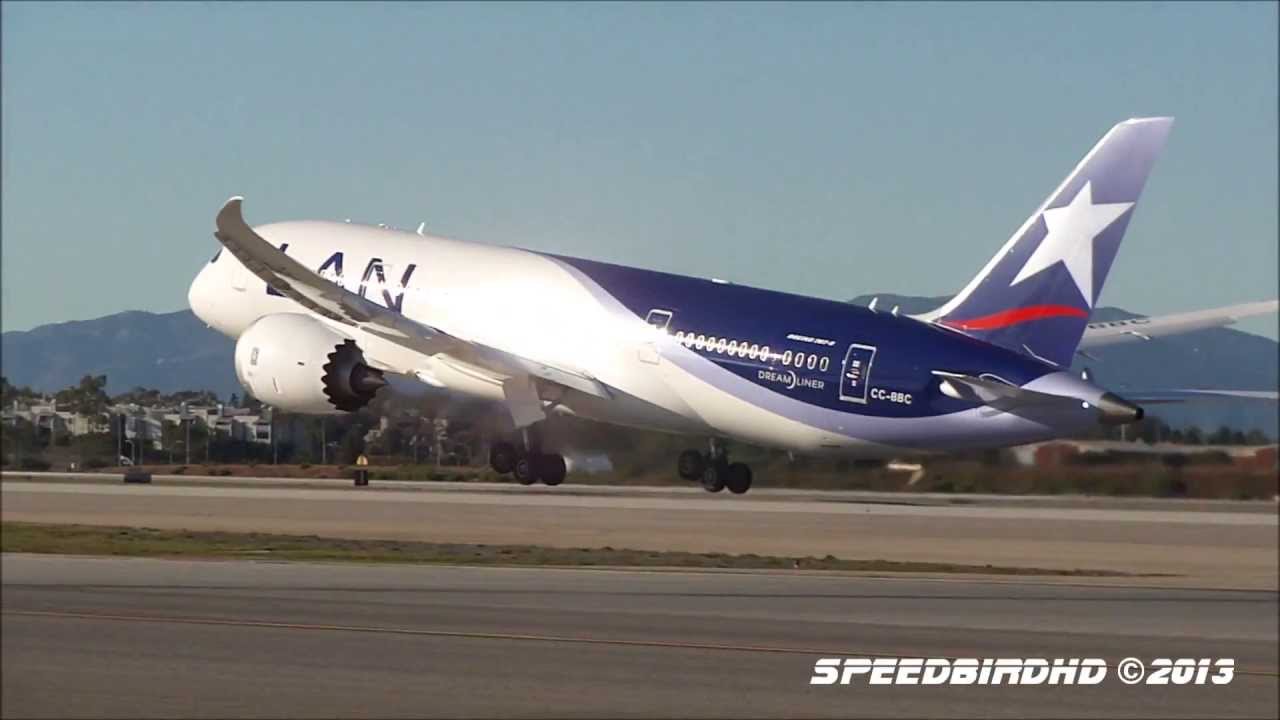
    Let's start off w/ this interesting vid of the Boeing line of AC
    --

  • #2
    How about building your own B737 flight simulator with an actual B737 cockpit?

    Search YouTube for: (There is a longer video too if you just search for James Price and simulator) James Price builds a flight simulator in his Pleasanton, California garage

      --

    Comment


    • fleetlordatvar
      fleetlordatvar commented
      Editing a comment
      HELL no, i'm not hardcore aviation, but i do like it. I was 99% military only when i was younger & now i tend to ignore military models as they are not interactive enough as a video game would be...if that makes sense, but i don't think it does.

  • #3

    BTW, Boeing delivers 8,000th 737; too bad it was to United w/ continental merger livery


    Boeing delivers 8,000th 737 to United Airlines

    By John Gillie
    Staff writerApril 16, 2014
    Facebook Twitter Google Plus Reddit E-mail Print


    Boeing's 8,000th 737 was delivered to United Airlines Wednesday
    BOEING CO.


    Just two years after Boeing delivered its first 737 airliner, orders were so poor that the company seriously considered shutting down production of the twin jet.
    How serious an error that would have been was boldly illustrated Wednesday as Boeing delivered its 8,000th 737, a Next Generation 737-900ER to United Airlines.

    United was the first American customer for the 737 in 1968. Boeing considered halting 737 production in 1970 when it received just 37 orders for the plane.
    Now Boeing is producing the popular single-aisle airliner at a record pace, 42 planes a month, at its Renton plant. And it plans to ramp that production pace to 47 aircraft monthly by 2017.

    The 737 is by far the most popular jetliner that Boeing or any other aircraft manufacturer has ever built. Boeing has seen customers order nearly 11,800 of the planes.

    Just how popular is the 737? Compared with other planes that were considered major commercial successes, 737 production numbers are many times theirs.
    Boeing's three-engine 727, once the most popular jet airliner ever built, had a production run of 1,831 planes. The plane that gave birth to popular passenger air travel, the Boeing 707, sold 1010 commercial examples.

    The world's first jumbo jet airliner, the Boeing 747, has generated 1,538 orders. Boeing's most popular widebodied jet, the twin-engine 777, counts 1,548 orders and deliveries.

    Other aircraft makers' jets were far less popular than the 737. Douglas sold just 556 of its DC-8s. Lockheed produced just 250 of its three-engine L-1011.
    The closest competitor to the 737 is Airbus's A320 family of single-aisle jets. Airbus last year delivered the 6,000th example of the A320.
    But some aerospace analysts are predicting that the A320 may someday surpass the 737 in total orders unless Boeing begins selling its newest member of the 737 family, the 737 Max, at a quicker pace.

    The first 737 Max is expected to go into service with Southwest Airlines in 2017. The Max has improved engines and aerodynamics for better fuel economy.
    --

    Comment


    • #4
      Apr 15, 2014, 1:57pm PDT Updated: Apr 15, 2014, 5:05pm PDT
      Boeing says 'No' to 757 Max rumors


      [IMG]http://media.bizj.us/view/img/1950441/shanghai757takeoffsm600*304xx299-199-1-0.jpg[/IMG] Enlarge Photo

      Boeing Co.
      Back in April 2005, when Boeing delivered its last 757 to Shanghai Airlines, it closed the door on that size aircraft. The company rejected rumors that a 757 Max will be built.


      Steve Wilhelm Staff Writer- Puget Sound Business Journal Email | Twitter

      Despite some recent rumors, including reports posted on financial website Motley Fool, Boeing doesn’t plan to build a 757 Max.
      Although a mid-sized medium-range jetliner may well be Boeing’s next aircraft, the company doesn’t plan to dust off the 757 fuselage and add new wings and engines.

      “No,” said Boeing spokesman Wilson Chow, in a refreshingly direct response to the question.
      “We don’t see a new airplane emerging until well into the next decade,” he wrote in an email. “As we always do, we will continue to evaluate the best low-risk solution for new development programs and production system architecture.”
      What this may mean is that Boeing Co. (NYSE: BA) will eventually develop an all-new replacement for the 757, which was based on a longer version of the 737 fuselage with bigger wings and engines.

      But don’t hold your breath. Right now, Boeing’s resources are going into current models.
      “Today we are aggressively focused on investing in our new products from the 737 Max to the 787 to the 777X, which will enter service between 2017 and 2020,” Chow wrote.

      Motley Fool had thought otherwise about the technology, saying in a Friday post, “Rather than create an all-new jet, Boeing could save a lot of time and expense by incorporating its latest technology into the 757 body.”
      The 757 was one of Boeing’s most popular aircraft, with 1,050 delivered when production stopped in 2004. The model was capable of carrying about 200 people very efficiently over medium-range routes. Close to 1,000 remain in service, but Airbus has been chipping at Boeing’s dominance in the category with its A321neo.

      In a story on a 757 successor we ran in February, we published a comment on Boeing's thinking, made at the Singapore Air Show, that had been picked up by other media outlets. “There may be a marketplace ... in an airplane that doesn’t have the range capability of a 787, but in the size category of 200 to 300 seats,” Boeing Commercial Aircraft Sales Director John Wojick was quoted as saying in news reports. Boeing’s Chow did suggest that the company is actively considering what to do about the mid-sized category. “We’re in the early stages of studying what the market size and requirements are, what’s right for our customers and what’s right for Boeing. There is no timeline,” he said. “This is one of many studies evaluating markets and how to spiral new capabilities into our products that better serve our customers.”
      --

      Comment


      • #5
        Fuji Heavy plans factory to make Boeing 777X wing boxes: Nikkei

        Mon Apr 14, 2014 10:46pm EDT

        0 Comments
        • Tweet
        • Share this
        • Email
        • Print


        Visitors talk next to a Boeing 777X aircraft model at the Singapore Airshow February 13, 2014.
        Credit: Reuters/Edgar Su


        (Reuters) - Japan's Fuji Heavy Industries Ltd (7270.T) plans to open a plant as early as next year to build wing boxes for Boeing Co's (BA.N) 777X passenger jet, the Nikkei reported. Fuji Heavy, which makes Subaru cars, will likely spend more than 10 billion yen ($98 million) to construct the factory at the same site in Aichi Prefecture, central Japan, where it assembles wing boxes for Boeing's 777 jets and its carbon composite 787 Dreamliner, the business daily said.
        Fuji Heavy is the sole maker of the component, which connects the main wings to the fuselage, for both those jetliners. By awarding the tried-and-tested supplier the contract for the 777X, the U.S. plane maker stands a better chance of having its latest plane ready for a planned rollout in 2020.

        Boeing, which has so far won 300 orders for the 777X at six airlines, said no decision on supply contracts had yet been made.
        "Supply chain partnerships and production system decisions will be addressed at the appropriate time," the planemaker said in a statement.
        A spokesman for Fuji Heavy said it will decide on construction of any facility to build 777X wing boxes when Boeing places an order.

        The new Fuji Heavy plant is expected to build 100 777X wing boxes a year, the Nikkei said.
        As Boeing will build the wings for the 777X in the United States, Japanese companies including Fuji Heavy, Mitsubishi Heavy Industries (7011.T) and Kawasaki Heavy Industries (7012.T) will likely get a smaller share of the aircraft construction than the 35 percent of the 787 they build.
        The companies and the Japanese government are instead aiming for a workshare of the 777X on a par with the 21 percent of the 777 airframe they make, including the wing box and parts of the fuselage.

        Japan's biggest carrier, ANA Holdings Inc (9202.T), gave that effort to win work from Boeing a boost in March when it ordered 20 777X wide-body jets.
        Local rival Japan Airlines (9201.T) last year opted for planes from Boeing's European rival Airbus Group (AIR.PA) to replace its older 777s, threatening the U.S. company's dominance in Japan where it holds more than 80 percent of the commercial aviation market.
        ($1 = 101.85 Japanese Yen) (Reporting By Tim Kelly and Maki Shiraki in TOKYO, Sampad Patnaik in BANGALORE; Editing by Savio D'Souza and Ryan Woo)
        --

        Comment


        • #6
          Originally published April 15, 2014 at 9:09 PM | Page modified April 16, 2014 at 6:07 AM
          Boeing managers say transfer of engineer jobs damaging talent, morale

          Company documents reveal that Boeing’s plan to transfer 1,000 technology research jobs out of Washington state has caused widespread internal dissent and confusion. Some top engineers are leaving to work elsewhere.

          By Dominic Gates
          Seattle Times aerospace reporter


          Managers describe employee views
          in official notes from recent meetings:
          It's not a transfer to new locations, but wholesale abandonment of existing expertise ...”
          Almost on a daily basis, we continue to see morale erode away.”

          Boeing’s December disclosure that it will transfer about 1,000 research engineering jobs out of Washington state has sown widespread internal dissent, distrust and confusion, according to internal employee feedback gathered by company managers. The major realignment of Boeing Research & Technology (BR&T) has prompted those managers to warn that Boeing could lose top talent as both veteran and early-career engineers, some with security clearances for defense work, scramble to hunt for jobs elsewhere. Meanwhile, managers within the Commercial Airplanes division — who depend upon technical support from BR&T engineering labs — are “telling their executives how this repositioning is going to be disastrous,” according to one document.

          In a weekly series of internal meetings since the beginning of the year, Boeing’s leadership has been gathering feedback from about 50 BR&T ground-level managers on how the “repositioning” is going. The official summary notes from those meetings, reviewed by The Seattle Times, show the feedback is unrelentingly negative. “Employees feel betrayed, upset,” said one manager in a January meeting. “Almost on a daily basis, we continue to see morale erode away,” said another in February. “More and more negativity — people out looking for jobs,” reported one Flight and Systems Technologies sub-unit manager in March. “Negativity is spreading throughout the team — numerous people — not just a few.” Boeing spokesman Tom Koehler said the notes are from meetings intended to provide constructive feedback. “Our leadership team welcomes it, because it is candid, it’s unvarnished,” said Koehler. “We appreciate the active dialogue. “We know that these changes are not easy,” he added. “But we believe they are necessary to enhance Boeing’s ability to provide effective and efficient technology solutions.” Ray Goforth, executive director of Boeing’s white-collar union, the Society of Professional Engineering Employees in Aerospace (SPEEA), said the documents show BR&T’s leadership is struggling to convince employees that Boeing has a sound business case for moving the work.
          “According to the company’s own documents, no one in the workforce, management or labor, is believing what they are being told,” said Goforth. “And it seems to be having a very detrimental effect upon the company.”

          Shock and disbelief
          The transfer of the BR&T jobs is just one in a series of moves of Boeing engineering work from the Puget Sound area.
          A year ago, Boeing announced it was moving 1,500 IT jobs to St. Louis and North Charleston, S.C.
          This month, it said it will shift 1,000 engineering jobs supporting in-service airplanes to California by the end of 2015, after two similar shifts to California last summer that totaled 675 jobs. BR&T is Boeing’s advanced central research-and-development unit, with more than half its 4,000 engineers and technical staff based in the Puget Sound region. Providing support to Boeing’s commercial, military and space units, BR&T engineers run labs that test loads on airplane parts or the performance of electronic systems. They also research breakthrough technologies for the creation of new products.
          In a December webcast, management told employees that about 1,000 jobs — roughly half the BR&T jobs here — will be moved by the end of 2015 to new technology research centers in Huntsville, Ala.; St. Louis and North Charleston, S.C. Most of the local staff whose jobs will move are not expected to be offered positions at the new centers, where jobs are being reposted at lower-paid grade levels. Soon after Boeing announced the plan, one manager at a Jan. 6 meeting listed the emotions shown by employees as “shock, disbelief, confusion, frustration, disappointment.”

          The BR&T staff were not given any specifics in December as to who would go and who would stay. Four months later, they know little more.
          The company said last month it will offer voluntary buyouts with up to 26 weeks of pay for some employees, but more details will not be available until May.
          BR&T Vice President Greg Hyslop has provided only a high-level explanation of the strategy. The reorg will “better meet the needs of our Commercial Airplanes and Defense, Space & Security business units, as well as our government R&D customers,” Hyslop told employees in December. “We are enhancing our ability to provide effective, efficient and innovative technology solutions.” He repeated such abstractions in local employee meetings in January and March. But the feedback documented by managers shows that the lack of additional detail on what will happen to individual employees created frustration, and that engineers weren’t buying the stated reasons for the move. “Most people I talked to said it was a waste of time to go over the Hyslop charts again because they don’t clearly state the business case,” reported one person in a February meeting. “What management is saying are the reasons is actually insulting to our intelligence. We are smart and the reasons don’t make sense.” In this meeting, one manager said critical remarks made at a local supplier conference earlier that month by noted aviation-industry analyst Richard Aboulafia were “resonating with people” and conveyed how they felt about the BR&T change.
          Aboulafia had said Boeing’s hardball treatment of the Machinists during the 777X negotiations “reeks of some sort of psychological exercise rather than an economically driven process.”

          Loss of talent
          When Boeing announced the BR&T shift, it said there would be no detrimental effect on its commercial-airplanes and defense units.
          But the meeting notes show that questioning of the rationale for the move grew as engineers learned that Boeing Commercial Airplanes was worried about the “negative impacts” on its business if the research unit lost too many experienced employees. The internal notes suggest that possibility is real.
          “Some A-players are actively looking for jobs or are being contacted by third parties,” state the notes from a January meeting.
          Later that month, one manager warned that “we will lose employees with Secret to Top Secret clearances. How do we transfer the work if we don’t have new people with the proper clearances?” In February, the worry over the loss of talented engineers continued.
          “Seeing more early career employees leaving Boeing. ... Some of the recent hires are very concerned about their job. About 80 percent of them are actively looking and several have already changed jobs,” read the notes from one meeting. “Many of our key, senior employees also feel at risk even though they may not be,” the notes add. “Top talent continues to leave,” reads a report later that month. Boeing’s Koehler acknowledged that losing experienced people is a concern, but said, “We are transitioning carefully so that we minimize the impact of knowledge loss.” He said BR&T staff who directly support the manufacturing of today’s jets won’t be asked to move, so “we’ll be able to maintain” the services offered to the Commercial Airplanes group.

          Disillusionment
          Employees cited in the feedback meetings expressed concerns that those high standards can’t be maintained. In one February meeting, according to the notes, Pat Stokes, who manages strategy and integration at BR&T, shared an email from a Seattle employee who commented that the movement of work out of the region is “not a transfer to new locations, but wholesale abandonment of existing expertise.” SPEEA’s Goforth said that while all this negative feedback documented by management is specific to the BR&T unit, similar feelings are being expressed in the other Boeing engineering groups hit by work transfers.
          Last week’s announcement that Boeing will transfer 1,000 more engineering jobs to California from the group that provides technical support to airlines “is being greeted by complete dismissal and outrage in the workforce,” he said. “The utter humiliation of laying everyone off and telling them they are welcome to reapply for their existing jobs in a new location has struck everyone as a nasty corporate practice,” Goforth said. The disillusionment with management’s strategy seems to have spread beyond those whose jobs are moving. In the notes from a BR&T feedback meeting in February, one manager summarized the feeling among some luckier engineers who are likely to stay in the Puget Sound region as part of the much smaller core team. “Why should I work hard?” one such engineer is cited as asking. “The capabilities we are losing will cause a downward trend in company success. Why would I want to build my career here?”
          Dominic Gates: (206) 464-2963 or dgates@seattletimes.com
          --

          Comment


          • #7
            Union rejects Boeing contract in Calif.

            By Pat Maio, The Orange County Register
            Published: April 18, 2014, 5:58 PM


            The aerospace union that represents an estimated 1,000 workers on Boeing Co.’s dying C-17 cargo jet program in Long Beach, Calif., rejected a proposed contract because of cuts to pension and medical benefits, union officials announced Thursday. The company’s offer didn’t even make it to members for a vote. “The proposal we received from the company is economically inferior and legally detrimental to this membership,” wrote bargaining committee officials for the United Auto Workers Local 148. “As a result, we have rejected the company’s proposal.”

            The local union had originally sought a membership vote Tuesday but decided to reject the offer outright in a sternly written letter to Boeing’s chief negotiator, Tom Easley. The union said the offer shortchanged workers in their final six months of work — when they’d be without a contract, as it now stands.

            “It’s all in the company’s court right now. We are willing to go back to the table and work something out,” UAW Local 148 President Stan Klemchuk said.

            A strike is not immediately in the picture because a five-year contract remains in place until February. The C-17 program ends in August, so a labor disruption in the six months after the current contract ends in February is speculative.

            Boeing’s Easley offered UAW’s bargaining committee, headed by Guy Coniglio, a “best and final” offer April 11 that would have shorted aging aerospace workers at the factory in Long Beach on their pension and medical benefits as they approach the twin marks of 30 years of service and age 55.

            Hitting the twin marks gives members full pension payouts and medical benefits, according to Klemchuk. The union is concerned, however, that roughly 280 of its members are less than a year short of 30 years of service and could get their pension cut by as much as 42 percent and greatly reduced medical benefits, had the contract been approved.

            In Boeing’s latest offer, the contract guaranteed a signing bonus of $4,000, 13 weeks of severance pay (which equates to roughly $21,000) and a bump in pension payments by $4 to $85 monthly per year of service.

            --

            Comment


            • fleetlordatvar
              fleetlordatvar commented
              Editing a comment
              how are they going to get money from a project that will end? This is the false sense of security that unions promise, 30 yrs later you'll get a pension. What about those members who are 5, 9 or more yrs away from a pension? At some point it has to end!

          • #8
            Boeing’s Bigger Dreamliner Seen Imperiling 787’s Profit

            By Julie Johnsson 2014-04-22T13:11:30Z
            Boeing Co. (BA)’s stumbles in producing a new, longer 787 Dreamliner are reviving concerns that the world’s largest planemaker isn’t close to breaking even on its marquee jet.

            As Boeing prepares to post first-quarter results tomorrow, a 2015 target to get the 787 into the black may be receding, said David Strauss, a New York-based analyst with UBS AG. He projects the Dreamliner program consumed $2 billion in cash in the period.

            Costs rose and deliveries slowed when employees at Boeing’s South Carolina factory couldn’t finish work on center fuselage sections as the output tempo rose and 787-9 assembly began. Boeing hired contractors to help complete the components and routed parts shipments away from the plant so the backlog of unfinished pieces doesn’t overwhelm storage space.

            Airlines Stick With Boeing's 787 Despite Bumpy Takeoff
            “Boeing has said it’s going to get to cash-flow break-even by early next year, and I just can’t see a path to get anywhere close to that,” Strauss said by phone. “The program is going to continue to burn cash well into the future.”

            Delays have plagued the Dreamliner since development began last decade, leaving the 2011 debut for the initial model, the 787-8, more than three years late. The 787 is the first jetliner built chiefly of composite materials rather than the traditional aluminum and relies on more electricity than conventional jets. In 2013, meltdowns in the lithium-ion batteries grounded the global fleet.

            Photographer: Patrick T. Fallon/Bloomberg The first Boeing Co. 787-9 Dreamliner airplane is assembled at the Boeing Everett... Read More

            Deliveries Due

            Deliveries of the larger 787-9 are due to start by midyear, followed by an even bigger version, the -10, later this decade. With 899 unfilled orders, the Dreamliner is central to Boeing’s efforts to convert a record backlog into a gusher of revenue.

            Boeing will probably report negative free cash flow of $1.54 billion after building about 30 Dreamliners and only delivering 18 last quarter, said Carter Copeland, a Barclays Plc analyst. Boeing hasn’t had negative free cash flow since 2011’s first three months, based on data compiled by Bloomberg.

            Cash consumption will be a focus even with Boeing likely to “handily” beat estimates, the New York-based Copeland said in an April 7 note. Analysts project profit excluding some items of $1.54 a share, based on the average of 19 estimates compiled by Bloomberg.

            Analysts are watching the 787’s deferred production cost, an accounting measure that is supposed to drop as the expense of building the plane declines with a projected improvement in efficiency. Boeing said last year that it estimated a ceiling of $25 billion, up from a previous forecast of $20 billion.

            Gains Stop

            “The disruptions and additional costs associated with introducing the 787-9 to the production process have brought cost reductions to a halt,” Douglas Harned, a Sanford C. Bernstein & Co. analyst in New York, said in an April 17 note.

            Doug Alder, a Boeing spokesman, declined to discuss the analysts’ projections ahead of tomorrow’s earnings release.

            “The 787 program continues to make improvements to its overall production system to increase productivity and reduce costs,” Alder said. “We anticipate continued improvement.”

            After more than doubling last year’s gain in the Standard & Poor’s 500 Index, Boeing has been a 2014 laggard as Dreamliner deliveries trailed the 10-a-month output target. The stock fell 0.1 percent yesterday to $127.82, pushing its 2014 decline to 6.4 percent against the S&P 500’s 1.3 percent advance. Copeland rates Boeing as overweight and Harned’s recommendation is outperform, while UBS’s Strauss is neutral.

            Two Factories

            Boeing builds 787s in two locations: the company’s main wide-body jet plant in Everett, Washington, and in South Carolina, at North Charleston. Workers at the South Carolina plant also knit together center fuselage sections from components from suppliers in Italy and Japan.

            While much of the 787-9 is borrowed from the smaller -8, slight changes in the dimensions of parts can require different manufacturing techniques and challenge the relatively inexperienced workforce in South Carolina, said Hans Weber, president of Tecop International Inc., a San Diego-based aerospace consultant.

            The 787’s composite fuselage lacks the pliancy that lets workers “bash to fit” aluminum hulls, and engineering support on the assembly line was “really stretched thin,” Weber said.

            Strauss estimated that Boeing can break even on 787-8s from Everett by late this year or early 2015.

            “The problem is, I think the -8 out of Charleston is going to burn cash and the -9 is going to burn cash,” he said. “They’ll eventually get there. But I think it’s two years in the future beyond what they’ve forecast. I think it’s 2017” for the whole program to be profitable.

            McNerney’s View

            Chief Executive Officer Jim McNerney drew a distinction between the manufacturing missteps on the 787-9, whose test flights are on schedule, and the postponements that dogged the -8 version.

            “This is not about a development program struggling,” McNerney told a Cowen & Co. conference in New York on Feb. 5. The center fuselage is “the part of the airplane that is most different between 787-8 and the 787-9.”

            Boeing’s South Carolina headcount grew by almost 1,000 since the end of December to 8,432 full- and part-time employees as of March 27, according to the company website.

            Boeing has routed fuselage subsections from Alenia Aermacchi SpA, an Italy-based supplier, to Wichita, Kansas, rather than North Charleston, UBS’s Strauss said. Those components, in temporary storage to avoid adding to the South Carolina logjam, amount to about $3 billion in inventory, Strauss said. Boeing’s Alder said the storage was “a longstanding planned activity.”

            While Boeing’s track record on reducing 787 production costs doesn’t inspire confidence, “we continue to take the long view, believing that ultimately the 787 will be a very successful program,” said Ken Herbert, a San Francisco-based analyst with Canaccord Genuity who rates Boeing a buy.

            To contact the reporter on this story: Julie Johnsson in Chicago at jjohnsson@bloomberg.net
            To contact the editors responsible for this story: Ed Dufner at edufner@bloomberg.net Stephen West
            --

            Comment


            • #9
              Boeing Wins $112.5 Million in Defense Contracts

              By Rich Smith | More Articles
              April 25, 2014
              The Department of Defense awarded 14 defense contracts in its Thursday evening announcement of contract awards. The total value of contracts awarded was $526.7 million. Boeing (NYSE: BA ) won two of these, including the biggest contract of the day.

              Boeing's big win was a $103.8 million firm-fixed-price contract that will fund the purchase of long-lead items needed to build Full Rate Production Lot 5 AH-64E Apache attack helicopters on order for the U.S. Army. The Army is currently engaged in a project to build new AH-64Es, and upgrade existing Apaches to the latest AH-64E configuration, which will see 634 AH-64Es produced when all is said and done. This current contract for Production Lot 5 is expected to run through Dec. 31, 2014.

              Boeing's soon-to-be-upgraded AH-64D Apache. Photo: Boeing.


              Additionally, Boeing won an $8.7 million cost-plus-fixed-fee delivery order to perform software updates on U.S. Navy P-8A Poseidon submarine-hunting aircraft. The Navy is expected to buy a total of 117 Poseidons from Boeing. Earlier this year, the Navy placed an order for Boeing to supply it with 16 Poseidons for a purchase cost of $2.07 billion. Delivery of those aircraft is due in April 2017. This current contract for software upgrades should be completed by August 2015.


              Boeing's P-8A Poseidon. Source: U.S. Navy

              --

              Comment


              • #10
                Meet Boeing's Ramis Tactical ISR Testbed

                Posted by Amy Butler 8:08 PM on Apr 24, 2014

                Boeing has been pushing hard to come on strong into the tactical ISR market. Despite the sputtering of the Enhanced Medium-Altitude Reconnaissance Surveillance System (Emarss) program for the U.S. Army, it seems the company had secretive customer that helped underpin the business a few years ago. But, what was known as the Yellow Jacket demonstrator for that unnamed customer has been morphed for roughly three years into what we now know as Ramis, the Reconfigurable Airborne Multi-Intelligence System.


                credit: Boeing


                The KingAir 350 ER based system is an improvement over other such platforms hastily fielded during the Iraq and Afghanistan wars because they allow for rapid swapping out of sensors and are based on open-source, Windows 7-based software, says Mike Ferguson, Boeing's Ramis business development official.


                Systems such as the L-3 Communications MC-12W Project Liberty, built for the U.S. Air Force, and Yellow Jacket were specific designs developed for a specific mission set, says Ashan Iqbal, Boeing's Ramis program manager. In the case of the MC-12W, the signals intelligence (sigint) and imagery collectors "do not talk to each other," meaning operators must fuse the data manually. Ramis, however, is developed specifically to allow for automated cueing of imagery sensors once an operator selects a sigint or comint return of interest. The goal is to decrease the time to identify and validate a target, whether it is a search-and-rescue or combat mission.

                The company has already demonstrated its Reconfigurable Airborne Multi-Intelligence System for a variety of customers, including Army acquisition secretary Heidi Shyu and foreign customers.

                Boeing officials also showcased RAMIS for media during a demonstration flight at Summit Aviation's facility in Middleton, Del., April 23. The market for such an aircraft – a Kingair 350 ER modified to carry multiple intelligence (multi-int) sensors – is at least 90 aircraft, says Mike Ferguson, Boeing’s business development lead for the program. The company plans to take its single Ramis demonstrator aircraft to the Canada Security conference in May but is unlikely to take it across the Atlantic Ocean for the Royal International Air Tattoo or Farnborough in the United Kingdom in July.

                For the press demonstration, Boeing had outfitted the system with its own Argon ST Wasp signals intelligence/communications intelligence system, a Wescam MX-15 electro-optical/infrared sensor ball and a CRI LodeStar wide-area-motion-imagery sensor (capable of collecting high-resolution images in rapid succession of a 10km X 10km swath of land). The sensors used for this demonstration were available for export; aircraft, operating systems and gimbals were all designed for rapid swapping of sensors, says Waldo Carmona, Boeing’s director of networked tactical ISR.

                The aircraft and its available mods have also been certified by the FAA, Ferguson says.

                The MX-15 was mounted on an elevator system into an extended nose on the platform. The WAMI camera was mounted in the gimbaled turret under the cockpit and Argon ST’s Wasp Comint sensor was fixed into the aft bay. There is also an “active sensor bay” under the midsection of the fuselage that is suitable for carrying a radar, hyperspectral or foliage penetration sensors. It was not used for this demonstration.

                Iqbal notes that the forward and aft bays were designed to carry different sensors. The forward section could also host a wide-area imagery camera or a light detection and ranging sensor. The system was designed to accommodate sensor swaps in less than four hours.

                For the demonstration at a Summit Aviation facility here, Boeing pilots geolocated a moving target using a push-to-talk radio. Onboard operators narrowed an ellipse of its probable location using the comint sensor. They then used the MX-15 and LodeStar to “get eyes on the target,” though clouds proved challenging. Carmona noted that in cloudy weather, the system could be fitted with a radar capable of collecting ground moving target indications and/or providing a synthetic aperture radar picture.

                Ferguson was vague about sales. He cited “customers” but declined to identify them or discussion how many orders or commitments there are for a Ramis system.

                The applications, however, are diverse. Customers could use such an aircraft for maritime patrol, border security or counter-drug operations as well as to support troops in combat.

                The Ramis demonstrator has two operator seats with one extra. It can be used for a passenger for as a third sensor operator seat with a laptop-based workstation.

                The aircraft is outfitted with a radome capable of accommodating a variety of satellite antennas, including those using Ka and Ku frequencies. It also is outfitted with a tactical common datalink aperture. These allow for delivery of specific data to dismounted soldiers on the ground if they have a handheld device capable of receiving the signal or via satellite to an intelligence operations center.

                Ramis grew out of Boeing’s work developing the U.S. Army’s Enhanced Medium-Altitude Reconnaissance Surveillance System, also built on the KingAir 350. The Ramis demonstrator platform was also once used as the demonstrator platform for the secretive “Yellow Jacket” program managed by Boeing for an undisclosed customer. Officials simply say Yellow Jacket is different from Ramis because the former was “point solution,” designed for a specific mission while Ramis is optimized for a variety of missions and sensors.

                Though eyed in the near term for foreign sales, Boeing is also early in chasing an emerging Army requirement for a Multimission Airborne Multi-int aircraft to complement its Emarss fleet. Mami is included as a requirement in its 2020 vision plan.

                Boeing says that the modifications for the green aircraft, which are delivered from Beechcraft’s final assembly facility in Wichita, Kan., can be done in several places in order to provide flexibility to customers.

                Ramis is also designed to allow for up to level four control – including tasking of sensor and remote piloting – of unmanned Hunter and Shadow unmanned aerial aircraft from the operator stations, Carmona says.


                --

                Comment


                • #11
                  Boeing wins order for 50 more 737s

                  By JOHN GILLIE
                  Staff writerApril 25, 2014


                  Shandong Airlines has announced an order for 50 of Boeing’s popular 737 single-aisle airliners.
                  The Chinese airline’s order has to be approved by the Chinese government before it becomes official. That’s likely a formality given the airline’s public announcement.


                  The order consists of 16 of Boeing’s Next Generation 737s and 34 of its upcoming 737 Max jets. The 737 Max is the latest version of the 737 with new engines and modified wingtips and aerodynamics to improve fuel usage by 13 percent.


                  The first 737 Max is scheduled to be delivered to launch customer Southwest Airlines in 2017.


                  All 737s are built in Boeing’s Renton plant. The 737 is the world’s best-selling jetliner with more than 11,000 sold and 8,000 delivered. Boeing recently increased its Renton production rate to 42 737s monthly to keep up with demand for the twin-engine jet. The company plans to bump that production up to 47 monthly in two years.
                  --

                  Comment


                  • #12
                    Faster jet production boosts Boeing's profit


                    Boeing's profits are up this quarter as the Chicago-based aerospace company increases commercial jetliner production. (AFPGetty Images)


                    Associated Press April 23, 2014, 6:25 a.m.


                    Boeing's increased rate of commercial jet manufacturing is starting to pay off for shareholders.

                    In the first three months of this year, 161 new airplanes rolled off the company's assembly lines — more jets than the same period last year. That increased rate contributed to a $965 million profit for Chicago-based Boeing Co. post in the first quarter.

                    The net income was actually down 12.7 percent from last year's $1.1 billion first quarter profit, but that is because Boeing took a $330 million accounting write-off related to changes in its retirement plans. The company also noted that its 2013 earnings were inflated by a one-time research and development tax credit.

                    Net income per share dropped to $1.28 per share from $1.44 during last year's first quarter. But adjusted to exclude the write-off, earnings were $1.76 per share, beating the estimate of $1.56 per share from Wall Street analysts surveyed by FactSet. Shares rose 2 percent to $130.15 in premarket trading.

                    The company reported $20.47 billion in revenue, more than the $20.15 billion expected by Wall Street. That's up 8 percent from the $18.9 billion in revenue during the same period last year.

                    Revenue at Boeing's commercial plane unit rose 19 percent. The business grew thanks to increased production rates on its 737 manufacturing lines. In April, the 737 program reached a production rate of 42 per month. Boeing hopes to increase that to 47 airplanes a month in 2017 to help feed a worldwide demand for the narrow-body jet.

                    The company's much delayed 787 Dreamliner also showed progress, reaching a production rate of 10 per month — although only 18 were delivered during the first quarter. Still, that's a major improvement over last year, when only one Dreamliner was delivered due to a worldwide grounding of the fleet over concerns about its lithium-ion batteries catching on fire.

                    Boeing has backlog of 5,100 airplanes on order with a combined book value of $374 billion.

                    On the defense side, revenue fell 6 percent and Boeing lowered its full year revenue guidance for military aircraft to $14.2 billion, down from $15 billion. Its global support and services revenue is expected to climb, however, from $7.8 billion to $8.6 billion. Both changes reflect a realignment within the defense unit.

                    Boeing also repurchased 19.4 million shares for $2.5 billion during the first quarter.

                    --

                    Comment


                    • #13
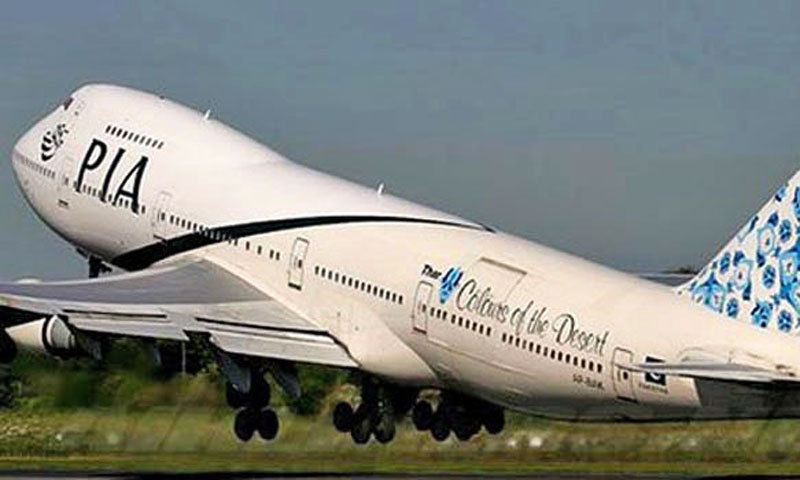
                      Nawaz gives nod to five Boeing 777 jets for PIA

                      APP
                      The prime minister also stressed the need to make PIA a profitable entity and said all efforts should be made in this direction. – File Photo
                      ISLAMABAD: Prime Minister Nawaz Sharif on Wednesday gave his approval for induction of five new Boeing 777 jets into the fleet of Pakistan International Airlines (PIA).

                      He also stressed the need to make PIA a profitable entity and said all efforts should be made in this direction, with enhanced customer services, on time flight arrivals and departures with safety being the foremost priority.

                      The premier directed the PIA board members to hire experienced professionals to run the national flag carrier on commercial basis, ensuring profitability and revival of its past glory
                      .
                      Prime Minister Sharif was chairing a meeting held here at the PM House to discuss the affairs of PIA.
                      Minister for Finance Ishaq Dar, Special Assistant to the PM Shujaat Azeem, Secretary Aviation Muhammad Ali Gardezi, DG Civil Aviation, Air Marshal (retd) Muhammad Yousaf and MD PIA Muhammad Junaid Yousaf attended the meeting.

                      During the meeting, it was also decided that PIA board members would discuss matters relating to the airline's restructuring and revitalisation on a regular basis with the PM.

                      The premier was told that the national flag carrier was presently in the process of acquiring 11 A320 aircraft on lease with deliveries starting from June this year.

                      He was further informed that with additional five Boeing 777 jets, the PIA would be in a better position to offer enhanced services to its passengers, increase revenue, destinations, flight punctuality and reduced maintenance costs.

                      The prime minister said the government would encourage privatisation of the PIA through competitive and transparent process without preemptive downsizing.

                      He showed trust in the airline's board of directors and lauded the competency of its members. There would be no interference in its matters and the government would extend full cooperation for streamlining the PIA, he added.

                      PM Sharif said the PIA was one of the country's national pride and its efficiency and high quality service were its hallmark. It had also set examples for other airlines, he added.

                      However, now the PIA has become a cause for national embarrassment as its performance deteriorated at breath-taking pace over the past decade, said the premier. It was now neither efficient nor profitable, he added.

                      He pointed out that the PIA had incurred loss of around Rs183 billion last year. The service delivery was equally lamentable, he added.

                      The prime minister was apprised of PIA's operations, including sales, marketing, engineering, cost cutting measures adopted and fleet planning.

                      He was briefed that steps had now been taken to overhaul the entity to restore its former position among the best airlines of the world.

                      The prime minister was informed that the closure of loss making routes had saved Rs902 million per annum. As many as 330 fake degree holder employees had been dismissed. A task force had been instituted to identify more fake degree holders on a fast-track basis.

                      He was also informed that a new SMS service had been launched and activated to inform the passengers for flight timings. All promotions would take place through mandatory NTS (National Testing Service) process. A dedicated task force was established at all major domestic stations to facilitate passengers.

                      The prime minister was told that new routes to facilitate passengers had been introduced, including Lahore-Quetta-Mashad, Quetta-Lahore-Multan, Jeddah-Multan and Multan-Madina.

                      He was further informed that six grounded aircraft had been refurbished and put into operation. Airlines Integrated Management System (AIMS) costing $1.5 million was now being put to optimal use for bringing efficiency and accountability in flight operation.
                      --

                      Comment


                      • #14
                        INDUSTRY: Boeing signs $1.8 million lease


                        Contributed Image/CONTRIBUTED IMAGE
                        Scene from the tarmac at Southern California Logistics Airport. The photo appears on the website listing attributes of the logistics airport in Victorville.


                        A Text Size


                        BY DEBRA GRUSZECKI
                        April 22, 2014; 03:01 PM


                        The Boeing Company has signed a three-year, $1.8 million lease to rent office and hangar space at the Southern California Logistics Airport in Victorville.

                        The Chicago-based aerospace company’s newly signed lease, which includes renewal options, includes 90,000 square feet of space in Hangar 678, along with 10,000-square-feet of office space.

                        Keith Metzler, assistant city manager, said in an April 22 press release that Boeing’s leasing agreement and lease extension options at Southern California Logistics Airport is an indication of the “pro-business climate” the city of Victorville has worked hard to create.

                        The city said the lease is worth $12 million if all three, three-year options are taken by Boeing over the next 12 years.

                        Southern California Logistics Airport, located on the edge of the Mojave Desert, is a 2,500-acre aviation and air cargo facility that took shape on the former George Air Force Base. The logistics airport, with a 24-hour control tower and emergency response capabilities, has a U.S. Customs office and status as a Foreign Trade Zone.

                        Boeing’s long-term lease commitment for Hangar 678 will give the aerospace company a place to centralize three growing operating divisions: Boeing Capital, Boeing AOG and Boeing Flight Test.

                        Hangar 678 is used for aircraft transition and modification work, such electronic and in-flight entertainment system upgrades or structural repairs. The hangar is also used to install furnishings in new aircraft.

                        Other long-term companies at the logistics airport include Plastipak Packaging, Inc., GE Transportation and Newell Rubbermaid. Plastipak customers include Procter & Gamble, Pepsi, Kraft Foods, Kroger and Tropicana.

                        The Securities and Exchange Commission filed a complaint April 2013 in U.S. District Court alleging that Victorville, the airport authority and Metzler – working with the underwriter for the bond offering -- misrepresented the value of four airport hangars in an official statement for an April 2008 bond offering.

                        The $65 million value was more than twice the value that the county assessor had put on the hangers: $27.7 million, according to the complaint. The SEC complaint alleges the inflated value allowed Victorville to raise more money than it otherwise would have.

                        Victorville has denied wrongdoing. Metzler’s attorney, who has told the court his client gave correct hangar information to the bond underwriter in March and April 2008, could not be immediately reached for comment.

                        The case is pending in federal court, an SEC spokesperson said Tuesday.

                        Contact Debra Gruszecki at 951-368-9423 or dgruszecki@pe.com


                        --

                        Comment


                        • #15
                          Boeing bans headphones, forces employees to stand still while answering phone calls

                          by Taylor Soper on 4/8/2014 at 6:10 pm | 18 Comments


                          Boeing employees have a new rule to follow while working: No more headphones.

                          New safety measures implemented later this month will ban the use of headphones for Boeing employees working in operations, production and transportation areas, according to MyNorthwest.com.

                          That’s not all, though. Employees in those areas must now answer work-related phone calls while standing in one place or use a hands-free method to take a call. If it’s a non-work related call, then Boeing employees must go to a designated area to answer, unless it’s an emergency.

                          A Boeing spokesperson told MyNorthwest that the rules are all about safety in the workplace and referenced “situational awareness.”

                          This is certainly an interesting issue. During my first job working at a small grocery market, I would occasionally listen to music while washing dishes or skewering raw meat and vegetables — the bosses didn’t mind, and it actually helped me stay focused. But when I rang up the cashier or greeted customers, my managers didn’t like seeing those white iPod earbuds.

                          What are your thoughts? Should employers allow headphones in the workplace?

                          Update, 6:45 p.m.: We reached out to Boeing about the new rules, and here’s the statement the company gave us:
                          “Boeing cares about the safety and well-being of its employees and is committed to a workplace where every person who works at or visits Boeing property leaves each day as healthy as when they arrived.

                          To continue being proactive in preventing injuries and incidents, Boeing is implementing new, company-wide standards for safety glasses, high-visibility/reflective wear and the use of electronic devices, including headphones. As of the middle of April, listening to music using ear buds or headphones is not allowed when walking or working in operations, production and transportation areas. This does not affect radios.

                          These standards strengthen workplace safety practices, promote situational awareness of risk, and reflect industry best practices.

                          The new standards apply to all individuals on Boeing property including visitors, customers, contractors, suppliers and others, and all Boeing employees performing work off Boeing property, unless superseded by local policy.”

                          Update, 8:05 p.m.: Boeing spokeswoman Katie Zemtseff told us that the smartphone rules also apply if someone is driving or biking in Boeing parking lots. The rules aren’t just for calls, either — those that are texting must also stand in place while in an operations, environment or transportation area

                          “The changes improve safety at Boeing and drive consistency throughout the company,” Zemtseff said.


                          Reach staff reporter Taylor Soper at taylor@geekwire.com or on Twitter @Taylor_Soper. Follow us on Twitter @GeekWire.
                          --

                          Comment

                          Bottom Ad

                          Collapse
                          Working...
                          X