
It's been June since I attempted one of these full on history threads for a US carrier because they take a while to do but I've found some time so its back to California we go for PSA. A lot of the info for the text here is taken from the following two great sites. Both are worth checking out:
PSA (the brainchild of Kenny Friedkin) began operations in 1949 with a single DC-3. The name seems to have been an amalgamation of two existing airlines (Pacific Air Lines and Southwest Airlines (later West Coast) - both later part of Air West) in an attempt to confuse patrons to fly with this small outfit. From the start the airline was flying with very low fares and became known as Poor Sailor's Airline because of all the navy traffic it got operating out of San Diego. Competition from the majors only served to give the young PSA some credibility and the airline avoided the wrath of the CAB (unlike so many post-war startup supplementals by keeping its operations intra-state and so out of the CAB's remit).
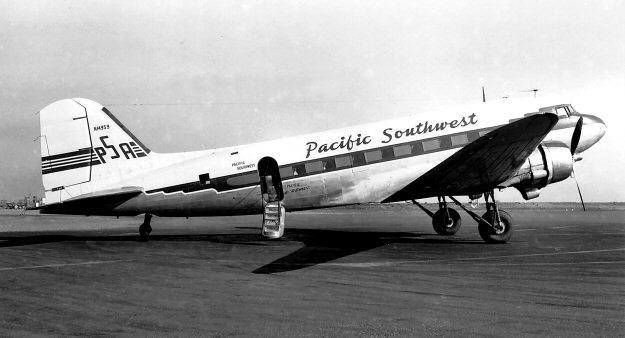
By 1952 there were 4 DC-3s and despite some ups and downs the airline was solid operating between San Diego, Burbank and San Francisco (Oakland and Long Beach were dropped in 1953). In 1954, the last year of DC-3 only ops, just over 102,000 passengers were carried. A pair of DC-4s arrived in 1955 and as profits rose fares went down. Further DC-4s joined and in 1958 Los Angeles was added.

PSA was flying and had grown so successful that it was able to buy new equipment of a size only flown by the Trunk airlines. This was pretty much unique in the US at the time. The type chosen was the new turboprop Lockheed L-188 Electra. Three of the 98 seaters joined in 1959 and despite their cost that year the airline made over $450,000. Profits continued to rise in the early 60s enabling an all Electra fleet to be bought in (the DC-4s and single DC-6s were all sold). By 1965 the airline's profit was an amazing $2.94 million! Sadly Kenny Friedkin had died in 1962 but the airline was passed to the safe hands of his right hand man J. Floyd "Andy" Andrews.
This is where the 1:400s begin as Aeroclassics have made a great Electra and the airline's next type the 727:
 Pacific Southwest Airlines 1960s Fleet by rstretton, on Flickr
 Pacific Southwest Airlines 1960s Fleet by rstretton, on Flickr
 Pacific Southwest Airlines 1960s Fleet by rstretton, on Flickr
 Pacific Southwest Airlines 1960s Fleet by rstretton, on Flickr
In July 1964 the airline ordered 5 new 727-100s which joined the 6 Electras the next year. Flight times between San Diego and San Fran were cut to 51 minutes and load factors continued to increase. PSA was by this time causing the trunks and especially the region's local service airline Pacific serious trouble. In 1966 2 extra 727-100s were added and despite more than doubling the fleet size in 2 years the airline's profits grew to over $4 million.
In 1967 the airline became all jet as the Electras were retired and a pair of DC-9s added. The DC-9s were part of a plan to setup a DC-9 flight training enterprise with Douglas but this wasn't a success and they didn't last long. Profits were undented however and PSA stayed with Boeing taking 727-200s and 737-200s in 1968 for a fleet of 20 jets. In 1966 the livery had been altered and the famous smiles began to be added around 1968. There are several stories about how the smiles came to be (see http://www.psa-history.org/about_psa/history ) but despite Andrews distaste for them they were a marketing coup and stayed till the end. Here's the late 60s fleet:
 Pacific Southwest Airlines 1960s Fleet by rstretton, on Flickr
 Pacific Southwest Airlines 1960s Fleet by rstretton, on Flickr
 Pacific Southwest Airlines 1960s Fleet by rstretton, on Flickr
 Pacific Southwest Airlines 1960s Fleet by rstretton, on Flickr
 Pacific Southwest Airlines 1960s Fleet by rstretton, on Flickr
 Pacific Southwest Airlines 1960s Fleet by rstretton, on Flickr
By 1969 the fleet had been standardised around the new 727-200s and 737-200s with just a single DC-9 and 727-100 left. 4.4 million passengers were being carried and profits were still high. By 1970 the airline had grown for 10 consecutive years and shown profits for 15.
The good times continued unabated through to 1972 when a record profit of nearly $6 million was made but in hindsight the airline's glory days were behind it and though there were still good times left things were going to get more difficult for the smiling airline.
We'll continue our PSA story in the next few days with more colourful smiles to come...


PSA (the brainchild of Kenny Friedkin) began operations in 1949 with a single DC-3. The name seems to have been an amalgamation of two existing airlines (Pacific Air Lines and Southwest Airlines (later West Coast) - both later part of Air West) in an attempt to confuse patrons to fly with this small outfit. From the start the airline was flying with very low fares and became known as Poor Sailor's Airline because of all the navy traffic it got operating out of San Diego. Competition from the majors only served to give the young PSA some credibility and the airline avoided the wrath of the CAB (unlike so many post-war startup supplementals by keeping its operations intra-state and so out of the CAB's remit).
By 1952 there were 4 DC-3s and despite some ups and downs the airline was solid operating between San Diego, Burbank and San Francisco (Oakland and Long Beach were dropped in 1953). In 1954, the last year of DC-3 only ops, just over 102,000 passengers were carried. A pair of DC-4s arrived in 1955 and as profits rose fares went down. Further DC-4s joined and in 1958 Los Angeles was added.
PSA was flying and had grown so successful that it was able to buy new equipment of a size only flown by the Trunk airlines. This was pretty much unique in the US at the time. The type chosen was the new turboprop Lockheed L-188 Electra. Three of the 98 seaters joined in 1959 and despite their cost that year the airline made over $450,000. Profits continued to rise in the early 60s enabling an all Electra fleet to be bought in (the DC-4s and single DC-6s were all sold). By 1965 the airline's profit was an amazing $2.94 million! Sadly Kenny Friedkin had died in 1962 but the airline was passed to the safe hands of his right hand man J. Floyd "Andy" Andrews.
This is where the 1:400s begin as Aeroclassics have made a great Electra and the airline's next type the 727:
Pacific Southwest Airlines 1960s Fleet by rstretton, on FlickrPacific Southwest Airlines 1960s Fleet by rstretton, on FlickrPacific Southwest Airlines 1960s Fleet by rstretton, on FlickrPacific Southwest Airlines 1960s Fleet by rstretton, on FlickrIn July 1964 the airline ordered 5 new 727-100s which joined the 6 Electras the next year. Flight times between San Diego and San Fran were cut to 51 minutes and load factors continued to increase. PSA was by this time causing the trunks and especially the region's local service airline Pacific serious trouble. In 1966 2 extra 727-100s were added and despite more than doubling the fleet size in 2 years the airline's profits grew to over $4 million.
In 1967 the airline became all jet as the Electras were retired and a pair of DC-9s added. The DC-9s were part of a plan to setup a DC-9 flight training enterprise with Douglas but this wasn't a success and they didn't last long. Profits were undented however and PSA stayed with Boeing taking 727-200s and 737-200s in 1968 for a fleet of 20 jets. In 1966 the livery had been altered and the famous smiles began to be added around 1968. There are several stories about how the smiles came to be (see http://www.psa-history.org/about_psa/history ) but despite Andrews distaste for them they were a marketing coup and stayed till the end. Here's the late 60s fleet:
Pacific Southwest Airlines 1960s Fleet by rstretton, on FlickrPacific Southwest Airlines 1960s Fleet by rstretton, on FlickrPacific Southwest Airlines 1960s Fleet by rstretton, on FlickrPacific Southwest Airlines 1960s Fleet by rstretton, on FlickrPacific Southwest Airlines 1960s Fleet by rstretton, on FlickrPacific Southwest Airlines 1960s Fleet by rstretton, on FlickrBy 1969 the fleet had been standardised around the new 727-200s and 737-200s with just a single DC-9 and 727-100 left. 4.4 million passengers were being carried and profits were still high. By 1970 the airline had grown for 10 consecutive years and shown profits for 15.
The good times continued unabated through to 1972 when a record profit of nearly $6 million was made but in hindsight the airline's glory days were behind it and though there were still good times left things were going to get more difficult for the smiling airline.
We'll continue our PSA story in the next few days with more colourful smiles to come...


Comment